Street DVD Brands: The Complete Guide (2000-2010)

Before streaming algorithms decided what hip hop was worth saving, a generation of filmmakers grabbed camcorders and hit the block. The street DVD era, roughly 2000 to 2010, produced some of the most honest documentation of hip hop culture ever recorded. These were not label-approved promotional materials. They were raw, unfiltered portraits of artists, neighborhoods, and moments that mainstream media refused to touch. If you care about street DVD brands and what they actually meant to the culture, this guide breaks down every major player, what made each one distinct, and why the archive they left behind is irreplaceable.
Table of Contents
Quick Takeaways
Key Insight
Explanation
Smack DVD debuted in 2003
SMACK stood for Streets Music Art Culture and Knowledge. It launched at the peak of hip hop's street magazine era and became the gold standard for underground documentation.
Cocaine City DVD started in 2002
French Montana co-created Cocaine City as a Bronx-focused street DVD directly inspired by the Smack model, using it to showcase his own music alongside major artists.
The Come Up DVD ran 18+ volumes
Director Jordan Tower built a massive partnership with Fendi to produce one of the most prolific street DVD series ever, covering interviews, music videos, and street culture.
Hip Hop Beef DVD documented rap conflicts
This brand specialized in compiling and contextualizing historic rap beefs, from 50 Cent vs. Ja Rule to Jay-Z vs. Nas, making it a primary record of hip hop's conflict culture.
The era ended when YouTube scaled
After YouTube's 2005 launch, fans ripped their DVDs and uploaded the content, fundamentally changing distribution. By 2010 the physical format had largely been displaced.
These DVDs are now endangered cultural artifacts
Most titles were never licensed for digital platforms. Physical copies degrade. Without active preservation, this decade of documentation disappears permanently.
Battle rap owes its modern format to street DVDs
Major battle rap leagues built their audiences directly on the foundation of street DVD culture, borrowing the format, the cameraman aesthetic, and the street credibility these brands established.
What Was the Street DVD Era
The street DVD era sits inside a very specific window of time when physical distribution still controlled culture but the cost of video production had dropped low enough for independent operators to compete. Camcorders were affordable. Blank DVDs were cheap. And mainstream media had completely abandoned street-level hip hop, leaving a gap that hungry, resourceful filmmakers filled on their own terms.
These were not bootleg operations in the criminal sense. They were fully functioning independent media companies that distributed physical DVDs through barbershops, record stores, bodegas, and street vendors. The economics were simple: produce the content, press the discs, hit the distribution network, collect the money, repeat. At their peak, certain titles moved tens of thousands of units per volume with no radio support, no retail partners, and no mainstream press.
What made the content itself distinctive was access. These filmmakers went where news cameras did not go, had conversations that label publicists would never approve, and captured artists in settings that revealed who they actually were rather than who their marketing teams needed them to be. The result was a documentary record of hip hop's most productive and turbulent decade that exists nowhere else.
The street DVD was the only media format where hip hop could document itself entirely on its own terms, without editorial oversight from people outside the culture.
Pro tip: If you are researching the street DVD era for the first time, start with the brands that had the widest geographic reach. Smack DVD and The Come Up DVD documented artists across multiple cities and coasts, giving you the broadest picture of what the era sounded and looked like before you dive into regional titles.
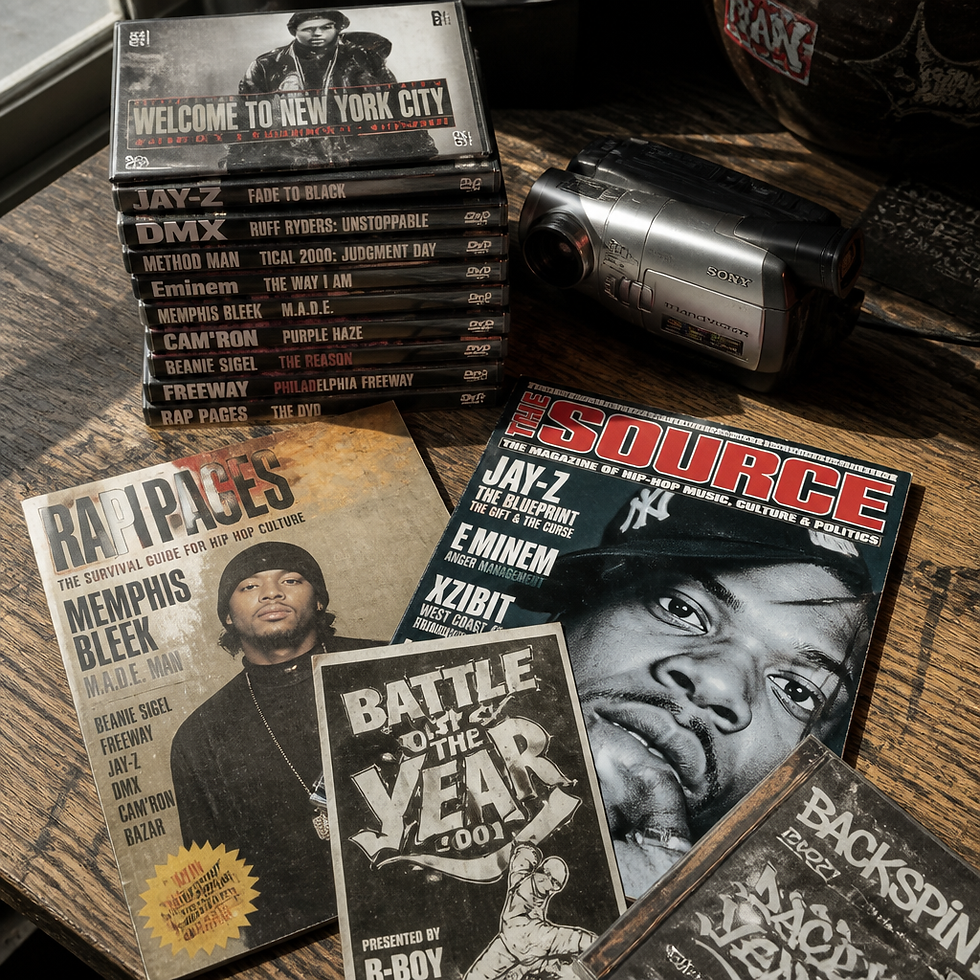

Smack DVD: The Blueprint
Smack DVD is the brand that every other street DVD is measured against. It debuted in 2003, at the height of hip hop's street magazine craze, with a name that served as its own mission statement: SMACK stood for Streets Music Art Culture and Knowledge. That acronym was not incidental. It was a declaration that what was being documented had value, depth, and cultural legitimacy that the mainstream refused to acknowledge.
What Made Smack DVD Different
The level of access Smack DVD achieved was unprecedented for an independent operation. The brand documented artists in their actual environments, not in styled studio setups. One of the most cited examples is the early Gucci Mane footage, filmed at Gucci's house, in his backyard and driveway, long before his national breakthrough. That kind of footage did not come from press junkets. It came from relationships, from being embedded in the culture rather than observing it from outside.
Smack DVD also captured major artists during periods when their relationship with the public was raw and unmanaged. You could see the difference between an artist in a label-approved interview and the same artist talking to a Smack camera. The latter was almost always more honest, more revealing, and more culturally significant.
Smack DVD's Legacy in Battle Rap
The brand's influence extended well beyond documentary content. The underground battle rap format that eventually became a massive live and documented event industry grew directly from the aesthetic and credibility that Smack DVD established. When battle rap audiences talk about what makes a battle feel authentic, they are describing values the Smack brand encoded into the culture during those early years.
Smack DVD produced multiple volumes across its run, each one building the brand's reputation as the definitive record of underground hip hop's most competitive creative era. The volumes are primary sources for any serious study of hip hop history between 2003 and 2010.
Cocaine City DVD: French Montana's Bronx Chronicle
French Montana, born Karim Kharbouch, co-created the Cocaine City DVD series beginning in 2002 alongside a close collaborator, drawing direct inspiration from the Smack DVD model. What started as a Bronx-focused documentation project became one of the most important regional street DVD brands of the entire era.
The Dual Purpose of Cocaine City
Cocaine City was built around two simultaneous goals. The first was documentation: interviews with major artists and emerging talent, coverage of hip hop conflicts, and street-level reporting on the culture as it actually existed in New York at the time. The second was self-promotion. French Montana used the platform to showcase his own music, freestyles, and collaborations, building an audience for himself as an artist while operating the brand as a media entity.
That dual-purpose model was smart and it worked. By the time French Montana transitioned from DVD filmmaker to signed recording artist, he already had a built-in audience of people who had watched him on his own footage for years. Cocaine City was not a vanity project. It was a strategic media operation that documented the culture while building a career from within it.
What Cocaine City Documented
The series focused heavily on Bronx street culture and hip hop beef, capturing the interpersonal dynamics and conflicts that defined the New York rap scene during a period of intense competition. The access that came from being local and connected meant that Cocaine City captured footage and conversations that out-of-town cameras simply could not obtain. This is exactly the kind of regional specificity that makes the street DVD archive so valuable as a historical record.
Pro tip: When studying Cocaine City DVD alongside Smack DVD, pay attention to how differently each brand framed its subjects. Smack had a broader, more national lens. Cocaine City was neighborhood-level, which made it more intimate and often more historically specific about place, relationships, and moment.
The Come Up DVD: Jordan Tower's Visual Empire
Jordan Tower is one of the most prolific and least-discussed filmmakers in hip hop history. Working first through Jordan Tower Films, he built a catalog that stretched from music videos to street documentation before forming the major partnership with Fendi that produced The Come Up DVD series across more than 18 volumes.
Jordan Tower's Path to Street DVD
Tower's background was in film production from the start. He shot for Hip Hop Nation on NBC while still in high school, then moved into music video direction, working with Cormega and through Koch Records. His early release of a CD and DVD with Mobb Deep, a project called Blood Thicker Than Water that he executive produced, moved over 150,000 discs. That commercial proof of concept opened the door to the DVD series format.
The Come Up DVD became the vehicle through which Tower and Fendi built what was arguably the most commercially successful street DVD operation of the era. The series ran to more than 18 volumes, a production depth that required infrastructure, relationships, and a consistent quality standard that most street DVD operations never achieved.
What Set The Come Up Apart
The Come Up DVD combined the street credibility of independently produced documentation with a production quality and distribution reach that approached professional media operations. It featured a mix of music videos, interviews, street footage, and cultural commentary that made each volume a comprehensive snapshot rather than a single-focus release. The breadth of the brand's coverage meant it captured artists and moments that were missed by more narrowly focused competitors.

Hip Hop Beef DVD: The Conflict Archive
Where most street DVD brands documented the culture broadly, the Hip Hop Beef DVD series built its entire identity around one of hip hop's most commercially durable and culturally complex phenomena: the rap beef. The series specialized in compiling, contextualizing, and presenting the conflicts that defined entire eras of hip hop history.
What the Beef DVD Series Captured
The most notable volumes brought together documentation of conflicts that stretched across multiple years and coasts. The 50 Cent vs. Ja Rule beef, one of the most commercially consequential feuds in hip hop history, received extensive coverage. So did Jay-Z vs. Nas, the conflict that produced what many consider the greatest diss records ever recorded. The series also covered Dr. Dre vs. Eazy-E, Common vs. Ice Cube, Tupac vs. Biggie, and KRS-One vs. MC Shan, giving viewers a historical timeline of how competition and conflict shaped the art form.
This is primary source documentation in the truest sense. The artists, the associates, the people who were present when these events unfolded spoke on camera in real time rather than through retrospective interviews filtered by years of reinterpretation. That contemporaneous quality is exactly what makes these recordings irreplaceable.
The Cultural Function of Conflict Documentation
Hip hop beef has always been misunderstood by outside observers who frame it purely as negativity or danger. What the Beef DVD series understood was that competition and conflict in hip hop are inseparable from the creative process. The same competitive drive that produced diss records produced the technical innovations, the lyrical elevation, and the commercial growth that defined the genre's most artistically productive period. Documenting the conflict was documenting the culture at its most alive.
Regional Brands That Shaped the Era
The five brands archived and presented through Hood Box Office represent the most nationally significant street DVD operations, but the era produced a much wider ecosystem of regional brands that documented their specific cities and communities with the same intensity and authenticity.
Philadelphia and the 2 Raw Model
Philadelphia produced its own major street DVD tradition. The 2 Raw For The Streets brand, built around a filmmaker known as Big Star, documented Philadelphia's street rap scene with a focus on battles and freestyles. The Philly model was notable for how directly the DVDs were connected to street-level tensions. Rapping on camera in that context was not purely artistic performance. It carried weight and consequence in the neighborhoods where the cameras were rolling.
After YouTube launched in 2005, fans of these regional brands began ripping their physical DVDs and uploading the content, acting as unofficial archivists who understood that this material would otherwise disappear. That grassroots preservation impulse is what saved many recordings that would otherwise be completely lost today.
The Raw Report DVD-Magazine
The Raw Report DVD-Magazine, founded in early 2003, took a format closer to a traditional print magazine but adapted entirely for video distribution. It combined coverage of mainstream and underground hip hop with professional editing that distinguished it from the more raw aesthetic of brands like Smack or Cocaine City. It represented one end of a spectrum within the street DVD space, where production polish competed with street authenticity as primary brand values.
Why Regional Brands Matter to the Archive
The national brands documented the biggest artists and the most widely known conflicts. The regional brands documented the block-level culture that fed those artists before they had any national profile at all. Together they form a complete picture. Without the regional archives, you have only the end product. The regional DVDs show you where the talent came from, how it was shaped, and what it was actually responding to in its local environment.
Comparing the Major Street DVD Brands
Brand
Primary Focus
Cultural Significance
Smack DVD
(est. 2003)
National underground hip hop documentation, artist access, battle rap culture. SMACK = Streets Music Art Culture and Knowledge.
Defined the aesthetic and credibility standards for the entire street DVD format. Directly seeded the modern battle rap industry. Captured artists like Gucci Mane before mainstream breakthrough.
Cocaine City DVD
(est. 2002)
Bronx-focused street culture, hip hop beef documentation, artist self-promotion. Co-created by French Montana as both filmmaker and featured artist.
One of the most important regional street DVD brands. Demonstrated that the format could serve as both cultural documentation and artist career infrastructure simultaneously.
The Come Up DVD
(18+ volumes)
Multi-format coverage including music videos, interviews, and street footage. Produced through Jordan Tower's partnership with Fendi across a large volume count.
Most commercially scaled street DVD series of the era. Combined street credibility with production quality that approached professional media standards. Prolific output created one of the deepest single-brand archives of the period.
Why This Archive Matters Now
The decade between 2000 and 2010 was the most productive, most conflicted, and most culturally transformative period in hip hop's commercial history. Artists who defined the sound of an entire generation came up during those years. The social conditions that shaped the music were recorded on these DVDs in ways that no other media format captured. And almost none of it was preserved by the institutions that are supposed to preserve cultural history.
The problem is physical degradation. DVDs do not last forever. Discs pressed in the early 2000s are now over twenty years old. The information layer on a recordable DVD has a finite lifespan, and that lifespan is running out. When these discs fail, the content on them is gone. There is no digital backup sitting in a label vault. There is no licensing deal that keeps these titles available. For most of this content, active physical preservation is the only thing standing between the historical record and a permanent blank.
This is precisely what makes the Hood Box Office model so important. Rather than waiting for institutional validation that will never come, the platform operates from the premise that this material has cultural value right now, that the people who lived through this era have a right to access their own history, and that preservation cannot wait for mainstream approval.
Pro tip: If you own physical street DVDs from this era, handle them with care and consider documenting what you have. The condition of surviving physical copies directly affects what can be preserved and presented digitally. Even knowing what titles exist in private collections is valuable information for any serious preservation effort.
Frequently Asked Questions
What does SMACK stand for in Smack DVD?
SMACK is an acronym for Streets Music Art Culture and Knowledge. The name was chosen deliberately to signal that the brand was documenting something with cultural depth and significance, not simply producing street content for its own sake. That framing was important in establishing the brand's credibility within the hip hop community.
Who created Cocaine City DVD and why?
Cocaine City DVD was co-created by French Montana, whose given name is Karim Kharbouch, along with a close collaborator, beginning in 2002. The series was directly inspired by the Smack DVD model and focused on Bronx street culture and hip hop beef. French Montana also used the platform to present his own music and freestyles, making it both a documentary project and a career-building tool for himself as an emerging artist.
How many volumes did The Come Up DVD produce?
The Come Up DVD series ran to more than 18 volumes. It was produced through a partnership between Jordan Tower of Jordan Tower Films and Fendi. Tower built his filmmaking credentials through work with artists including Cormega and Mobb Deep before building the infrastructure that made such a prolific output possible for The Come Up DVD series.
Why did the street DVD era end around 2010?
The combination of YouTube's growth after its 2005 launch and the broader shift to digital distribution fundamentally changed how street-level hip hop content was produced and consumed. Fans began ripping physical DVDs and uploading the content to free online platforms, which undercut the economics of physical disc distribution. By 2010, the infrastructure that had supported the street DVD business model had largely been displaced by online video. The content survived in fragmented digital form, but the physical format and the business model that sustained it did not.
What kinds of artists appeared on street DVDs?
Street DVDs featured artists at every level of the industry, from established names seeking unfiltered media exposure to completely unknown local talent appearing on camera for the first time. The format was particularly valuable for documenting artists before their mainstream breakthroughs, capturing them in their original environments and creative contexts. Gucci Mane, for example, appeared on Smack DVD footage shot at his home before his national profile developed.
Are street DVDs from the 2000s still available anywhere?
Physical copies circulate through private collectors and occasionally through resale markets, but they are increasingly rare and the discs themselves degrade over time. The Hood Box Office platform, built in partnership with the Wendy Black Foundation, exists specifically to address this preservation gap by archiving and presenting content from the major street DVD brands of the era, including Smack DVD, Cocaine City, The Come Up, Jordan Tower Films, and Hip Hop Beef, in a form that the culture can actually access.
What made street DVDs different from music videos?
Music videos were produced for label approval and radio or television distribution. Street DVDs operated entirely outside that approval structure. They captured artists in unscripted environments, recorded conversations that labels would never sanction, and documented aspects of hip hop culture that had no place in approved promotional material. The result was a fundamentally different kind of record: not a performance, but documentation. That distinction is what makes these archives historically irreplaceable rather than simply nostalgic.
If you grew up watching any of these brands or if you are coming to this era fresh, we want to hear which street DVD brand had the biggest impact on your understanding of hip hop culture.
We would love your feedback and any insights you would share with others. What perspective would you add?


Comments