Cocaine City DVD: The South's Street Reality Preserved

When BET was busy counting down the same polished videos on 106 & Park, a different kind of documentation was moving through barbershops, corner stores, and car trunks across the country. The Cocaine City DVD series was not trying to get airplay. It was trying to tell the truth. Launched in 2002 by French Montana, born Karim Kharbouch, alongside his close friend Cams, the series ran for 14 volumes over eight years, capturing interviews, street beefs, freestyles, and raw cultural footage that no mainstream outlet was willing to touch. Understanding what Cocaine City accomplished means understanding why platforms like Hood Box Office exist today.
Table of Contents
Quick Takeaways
Key Insight
Explanation
Cocaine City ran from 2002 to 2010
The series produced 14 volumes plus various spin-offs, making it one of the longest-running street DVD brands of the era.
French Montana created it before his rap career
He used the DVDs to build an audience and insert his own freestyles, effectively making Cocaine City both a cultural document and a launchpad.
Volume 1 featured Pee Wee Kirkland and Remy Ma
These early interviews with street legends and established artists established the series' credibility from the start.
Distribution was entirely grassroots
DVDs moved hand-to-hand, through barbershops, independent retailers, and bootleg networks, bypassing radio and major label gatekeepers entirely.
Cocaine City documented the Max B era in detail
The series captured French Montana and Max B's creative partnership and the surrounding street dynamics at a moment no mainstream outlet was covering.
The series was inspired by Smack DVD
French Montana and Cams built Cocaine City after watching Smack DVD and deciding they could do the same for their scene in the Bronx.
This content is now at risk of permanent loss
Physical DVDs degrade. Platforms like Hood Box Office exist specifically because content from this era vanished from mainstream archives and streaming services.
What Was the Cocaine City DVD Series
The Cocaine City DVD series was a grassroots hip hop documentary brand launched in 2002 by French Montana and his friend Cams. It was directly inspired by the Smack DVD model: a street-level publication distributed outside of traditional media channels, built entirely on access, authenticity, and word of mouth. French Montana himself acted as host, cameraman, and marketer, putting himself in every volume while interviewing figures who shaped the culture from the ground up.
The first volume set the tone immediately. Featuring Pee Wee Kirkland, the legendary Harlem basketball figure and street icon, alongside Remy Ma, the series announced that it was not interested in celebrity fluff. It wanted street credibility and real conversation. That foundation held for 14 volumes across eight years.
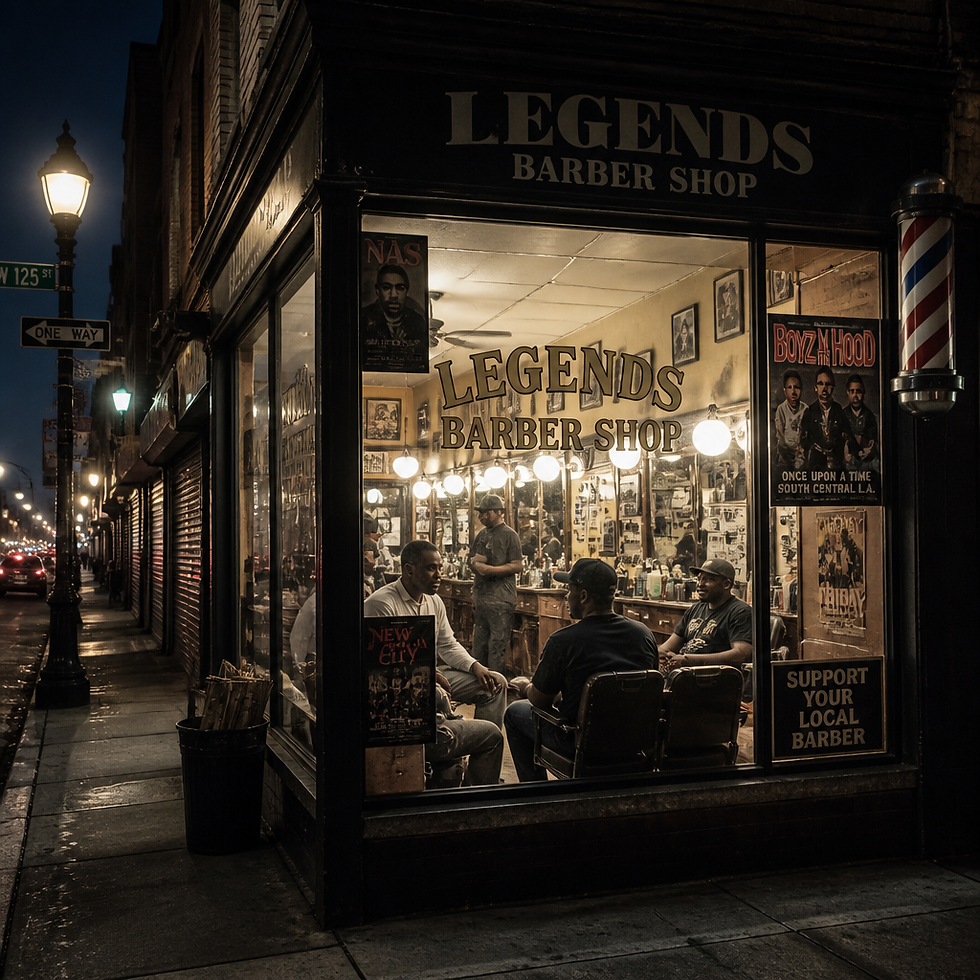
Distribution worked the way all underground media worked at that time. DVDs moved through barbershops, corner stores, and informal networks, not through retail chains or broadcast deals. For a pre-YouTube generation of hip hop fans, this was the primary way to see unfiltered footage of artists and personalities who had no mainstream outlet willing to represent them honestly.

Pro tip: If you are researching the Cocaine City DVD series for historical context, focus on the arc from Volume 1 through the Coke Wave era with Max B. That run documents a specific creative and street moment in the Bronx that is almost entirely absent from mainstream hip hop journalism.
The Gap Mainstream Media Left Open
BET and MTV in the early 2000s operated on a narrow definition of what hip hop looked like. If an artist had a major label deal and a polished video, they got airtime. Everyone else did not exist as far as the broadcast infrastructure was concerned. That logic left enormous portions of the culture undocumented, particularly street-level movements in cities and neighborhoods that did not fit the commercial template.
The underground DVD circuit filled that gap directly. As one account of the era describes it, these films "took viewers to a world not readily shown in the mainstream," providing "insight to stories of street culture in America" that broadcast media was not capturing. Cocaine City operated in exactly that space, covering hip hop as it actually existed for the people living it, not as it was packaged for a suburban prime-time audience.
The street DVD era created a parallel media infrastructure that answered a question mainstream outlets refused to ask: what does hip hop look like when nobody is editing it for advertisers?
The Southern hip hop history angle is especially important here. While Atlanta, New Orleans, Houston, and other Southern cities were developing genres and scenes that would eventually dominate the entire industry, early 2000s media coverage remained East Coast and West Coast focused. Cocaine City, though Bronx-based, occupied the same underground circuit that gave Southern rap its early national reach through barbershop distribution and informal networks. The DVD era as a whole was the mechanism by which Southern hip hop reached audiences before BET and mainstream radio caught up.
How Cocaine City Worked as Street Journalism
The mechanics of Cocaine City as a media operation are worth examining carefully, because they explain both its cultural value and why preserving it is difficult. French Montana wore every hat simultaneously. He was the interviewer, the camera operator, the distributor, and one of the subjects. That level of embedded, first-person documentation is almost impossible to replicate through any institutional journalism model.
The Role of Street Access
What made Cocaine City credible was the same thing that made it invisible to mainstream outlets. French Montana had access that no credentialed journalist could have manufactured. The conversations captured on these DVDs happened because the people being recorded trusted the person holding the camera. That trust produced content that is genuinely irreplaceable as a historical document.
The series' coverage of the French Montana and Max B creative partnership is a specific example. By 2008, Max B had built significant underground buzz while simultaneously navigating a public dispute with Jim Jones. The cultural moment around that conflict, the music, the street dynamics, the personalities involved, was documented in detail on Cocaine City DVDs at a time when no mainstream outlet was paying close attention. When Max B was sentenced to prison in 2009, that documentation became the primary record of a significant chapter in New York hip hop history.
Distribution as a Cultural Act
Moving DVDs hand-to-hand through barbershops and corner stores was not just a business model. It was a replication of how hip hop had always spread: person to person, community to community, without waiting for institutional approval. The Smack DVD co-founders Tony Mitchell and Eric Beasley had built a similar model, and French Montana explicitly cited watching Smack DVD as the direct inspiration for starting Cocaine City. That lineage matters when you think about what the street DVD era represented as a whole.
Pro tip: When comparing street DVD series, pay attention to regional emphasis. Smack DVD was heavily New York-centric. Cocaine City followed a similar East Coast lane but captured a different neighborhood ecosystem. The Come Up and Cocaine City together document different scenes within the same broader street culture archive.
Cocaine City and the Southern Hip Hop Connection
The southern hip hop history connection to the DVD era runs deeper than geography. The underground DVD circuit was the infrastructure that allowed Southern rap to reach national audiences during the years when mainstream media was still treating it as a regional curiosity. Labels like Cash Money, No Limit, and later the Atlanta trap scene built national followings partly through this parallel distribution network of DVDs, mixtapes, and barbershop culture.
Cocaine City moved through the same distribution channels that Southern rap used. A kid in Atlanta who bought Cocaine City at a barbershop in 2004 was participating in the same cultural exchange network that was also moving footage of T.I., Young Jeezy, and Lil Wayne before those artists had major mainstream profiles. The DVD era was not divided by region the way radio was. It was unified by the barbershop counter and the car trunk.

This is why the street culture archive project matters for understanding Southern rap specifically. The footage that captured the South's rise in hip hop before BET acknowledged it was not filmed by journalists. It was filmed by people embedded in the culture, moving through the same distribution networks as Cocaine City. Preserving any part of this era means preserving the whole interconnected ecosystem.
Comparing the Major Street DVD Brands
The street DVD era produced several major brands, each with a distinct identity, regional focus, and approach to documentation. Understanding where Cocaine City fits requires comparing it to the others directly.
DVD Brand
Primary Focus and Style
Key Contribution to the Archive
Smack DVD
Broad national coverage of established and emerging hip hop artists; originated the battle rap documentary format; founded by Tony Mitchell and Eric Beasley in 2003
Created the template for the street DVD format and launched the careers of battle rappers who had no other platform; documented the full landscape of 2000s East Coast hip hop
Cocaine City DVD
Bronx-focused, embedded street journalism hosted by French Montana; covered beefs, freestyles, and street figures with direct personal access; ran 2002 to 2010
Documented the French Montana and Max B era in granular detail; captured a specific neighborhood ecosystem and cultural moment that mainstream media entirely missed
The Come Up
Mid-Atlantic and broader East Coast coverage with a focus on emerging artists and mixtape culture; connected street credibility to the rise of internet rap distribution
Bridged the street DVD era and the early digital era; documented artists during the transitional moment when the culture was shifting from physical to digital distribution
Each of these brands documented a different slice of the same era. None of them duplicated what the others were doing. That is precisely why losing any one of them to link rot, physical degradation, or platform removal represents a real cultural loss, not just a nostalgic inconvenience.
Why Cocaine City DVDs Disappeared and Why That Matters
The series ended in 2010, and its disappearance from accessible circulation followed a pattern common to almost every street DVD brand. YouTube's rise undercut the physical distribution model, and the content itself was never picked up by mainstream archivists or streaming platforms because it did not fit the commercial or editorial categories those platforms were built around. Raw street documentation from 2002 does not get licensed deals. It gets forgotten.
Physical DVDs degrade. Hard drives fail. The people who held collections moved on, and the material scattered. Some volumes exist in personal collections. Some have been partially ripped and uploaded informally. But there is no authoritative, complete, properly preserved digital archive of the Cocaine City series available to researchers, fans, or cultural historians right now. That is the actual problem that platforms focused on the street DVD era exist to address.
Compare this to how mainstream media from the same period is treated. Every BET broadcast from 2002 is catalogued. Every MTV Video Music Awards performance has a home. The underground culture that was feeding those mainstream spaces from below, including the DVD series that documented the artists before they had mainstream profiles, has no equivalent institutional support. The asymmetry is stark and it is not accidental.
Pro tip: When looking for Cocaine City content today, be cautious about informal upload sites. Quality varies, volumes are often mislabeled, and there is no curatorial standard applied to what gets uploaded. A dedicated archive with proper cataloguing is a fundamentally different resource than a random search result.
What Cocaine City Means for Cultural Archiving Today
The Cocaine City DVD series is not just a nostalgic artifact. It is primary source material for understanding a specific period in hip hop and street culture history. Every interview French Montana conducted with a street figure, every freestyle captured on a Bronx corner, every beef documented in real time is a historical record that exists nowhere else. Treating it as anything less than that is a category error.
Hood Box Office, in partnership with the Wendy Black Foundation, exists specifically because this content needs the same institutional seriousness that any other cultural archive receives. The underground street DVD era from 2000 to 2010 produced a body of documentation that is irreplaceable. The Cocaine City series sits alongside Smack DVD, The Come Up, Jordan Tower Films, and Hip Hop Beef as part of a complete picture of what hip hop culture actually looked like during those years, on the ground, before the industry curated the story for public consumption.
Archive.org preserves web content. WorldStarHipHop preserves fights and viral moments. Neither was built to curate and contextualize the street DVD era as a coherent cultural record. That requires a different approach, one that understands the material, respects its origins, and presents it to an audience that knows what they are looking at. That is what a dedicated street culture archive provides that general platforms cannot.
Frequently Asked Questions
What was the Cocaine City DVD series and who created it?
The Cocaine City DVD series was an underground hip hop documentary brand launched in 2002 by French Montana, then known as Young French, and his friend Cams. The series ran for 14 volumes over eight years until 2010, capturing street interviews, freestyles, and hip hop culture footage distributed through barbershops, corner stores, and informal networks, not through mainstream retail or broadcast channels.
How many volumes did Cocaine City release?
The series produced 14 volumes plus various spin-offs between 2002 and 2010. This makes Cocaine City one of the longer-running street DVD brands of the era, alongside Smack DVD and The Come Up, each of which maintained consistent output throughout the 2000s.
What made Cocaine City different from other street DVD brands?
Cocaine City was distinctive because of its deeply embedded, first-person format. French Montana was not an outside journalist covering the scene. He was part of it, conducting interviews with street figures and established artists while simultaneously inserting his own music and freestyles into each volume. That dual role as documentarian and subject gives the series a texture that more arm's-length documentation cannot replicate.
Why is the Cocaine City DVD series considered part of Southern hip hop history if it was Bronx-based?
The connection is infrastructural rather than geographic. The street DVD circuit was the distribution network that allowed Southern rap to reach national audiences before mainstream radio and BET caught up to the culture. Cocaine City moved through the same barbershop and corner store networks that were spreading Southern hip hop across the country. Understanding the DVD era as a whole is essential to understanding how Southern rap built its national audience in the early 2000s.
Where can fans and researchers access Cocaine City DVD content today?
This is the core preservation problem. The series has no official streaming home, no institutional archive, and no commercially available complete collection. Some content exists in scattered informal uploads, but without proper curation, cataloguing, or quality control. Dedicated platforms like Hood Box Office, which focus specifically on the street DVD era as a cultural archive, represent the most serious approach to making this material accessible with proper context.
What artists appeared on Cocaine City DVDs?
The first volume featured Pee Wee Kirkland and Remy Ma among others. The series went on to document the rise of Max B alongside French Montana, capturing their creative partnership and the surrounding street dynamics in detail. The DVDs also featured interviews with a range of other rappers, street personalities, and figures who were part of the Bronx and broader New York hip hop ecosystem during that period.
Why did street DVD series like Cocaine City stop being made?
The street DVD era ended primarily because YouTube and digital distribution replaced the physical distribution model that made it work. When anyone could upload footage for free, the economics of pressing, distributing, and selling physical DVDs collapsed. The cultural role those DVDs played did not disappear, but the format did, and much of the content created during the era was never properly transferred to digital preservation before it was lost or scattered.
If you followed the street DVD era, whether you were buying Cocaine City out of a barbershop or tracking down volumes years later, share what those DVDs meant to you and what you think is worth preserving.
References
Cocaine City DVD Archive: official site preserving the legacy of the series
French Montana's impact on hip hop including his role founding the Cocaine City DVD brand
Complex interview with French Montana on how Cocaine City started and his path from DVDs to rap
XXL's breakdown of the top Smack DVD moments and the street DVD era's cultural significance


Comments