Before WorldStar: The Street DVD Era That Started It All

Long before anyone refreshed a timeline waiting for a fight clip to go viral, there was a physical disc changing hands in a barbershop. The street DVD era from roughly 2000 to 2010 was the original viral content platform, a grassroots media ecosystem that moved millions of units, launched careers, and documented Black street culture with an honesty that no television network would touch. Understanding this era is not nostalgia for its own sake. It is understanding where modern hip hop media actually came from, and recognizing just how much cultural history disappeared when those discs stopped selling.
Table of Contents
What Was the Street DVD Era?
The street DVD era refers to the period, concentrated between 2000 and 2010, when independent videographers and entrepreneurs produced physical disc magazines that circulated through underground hip hop networks. These were not polished corporate productions. They were shot on consumer-grade cameras by people who actually lived in the communities they were documenting, sold out of car trunks, and traded hand-to-hand like contraband.
The format worked because it filled a vacuum. BET and MTV controlled hip hop's visual presence on television, and that control meant editorial gatekeeping, advertiser pressure, and a systematic flattening of anything too raw, too regional, or too real. Street DVDs operated entirely outside that system. No network approval needed, no label budget required, no standards and practices department to appease.
The result was a genre of documentary content that captured hip hop culture at street level, meaning the actual corners, barbershops, recording studios, and block parties where the music was born, not the sanitized version that ended up on cable.
How Street DVDs Functioned as Viral Content
Calling street DVDs "viral content" before the internet made virality possible sounds like a contradiction. It is not. The mechanics were the same. A disc would drop, word spread person-to-person, copies multiplied, and the content inside became a reference point that an entire community would quote, debate, and replay. The only difference was the transmission method: physical media instead of a share button.
Think about what virality actually requires. It requires content that people feel compelled to pass to someone else. It requires a distribution network that reaches the intended audience faster than gatekeepers can stop it. It requires a format that generates conversation. Street DVDs satisfied all three conditions perfectly, and they did it without an algorithm or a platform deciding who got visibility.
The original viral loop was not a retweet. It was one person handing a disc to another person and saying, "You have to see this."
The content that spread fastest on street DVDs followed the same patterns that drive engagement today. Beef between artists, unfiltered interviews where rappers said things they would never say on radio, surprise freestyle performances by unknown artists who would later become stars, and raw documentation of street life that felt like access no outsider could get. Every volume was engineered, intentionally or not, to be passed along.
Pro tip: When studying the street DVD era, pay attention to the moments that spread fastest within each volume. They reveal exactly which content formats hip hop audiences responded to before social platforms existed to measure that response with data.
The Brands That Defined the Era
Several specific productions shaped what the street DVD era became. These were not interchangeable. Each had a distinct editorial identity, a regional footprint, and a specific role in the broader ecosystem.
Smack DVD
Smack DVD, founded by Troy "Smack" Mitchell out of Queens Village, New York, became the most nationally recognized brand of the era. The name stood for Streets, Music, Arts, Culture and Knowledge. Mitchell started with a Sony PD150 camera, a PC, and Premier 6.0 editing software, and built something that would eventually move 40,000 to 50,000 copies independently, with nationwide distribution through independent retailers selling discs for as much as $20 per unit. Smack DVD was the streets' go-to source for battles, beef, and exclusive interviews at a time when getting unfiltered access to your favorite rapper required buying a physical disc.
The Come Up DVD
Born out of Brooklyn in the mid-2000s through Dirty Money Films, The Come Up DVD became what its own legacy describes as the underground bible of independent hip hop. It sold through barbershops, corner stores, and street vendors from New York to Atlanta to Houston. Its catalog captured artists at the exact moment they were becoming who they would become, including Lil Wayne before Tha Carter III and Kendrick Lamar before mainstream recognition found him.
Cocaine City DVD
In 2002, French Montana and his collaborators launched the Cocaine City DVD series, drawing direct inspiration from Smack DVD. This was a grassroots media product built specifically for the pre-YouTube era when hip hop moved through barbershops, corner stores, and bootleg networks. Montana served simultaneously as host, cameraman, and marketer, conducting interviews with street legends and established artists while using the platform to build his own profile before his music career took off.
Other Defining Brands
Jordan Tower Films, Hip Hop Beef, and regional series like the 2 Raw for the Streets series out of Philadelphia each carved out their own audiences and documented scenes that national media ignored entirely. 2 Raw, founded by Michael Starling, focused specifically on the Philadelphia hip hop underground and gave exposure to a generation of battle rappers who would later influence the entire direction of battle rap culture.


The Distribution Network: Barbershops, Corner Stores, and the Trunk
The distribution infrastructure of the street DVD era deserves as much attention as the content itself, because it was genuinely innovative. These discs did not go through record store chains or media distributors. They moved through a network built on trust, community relationships, and the same informal economies that had always sustained underground hip hop.
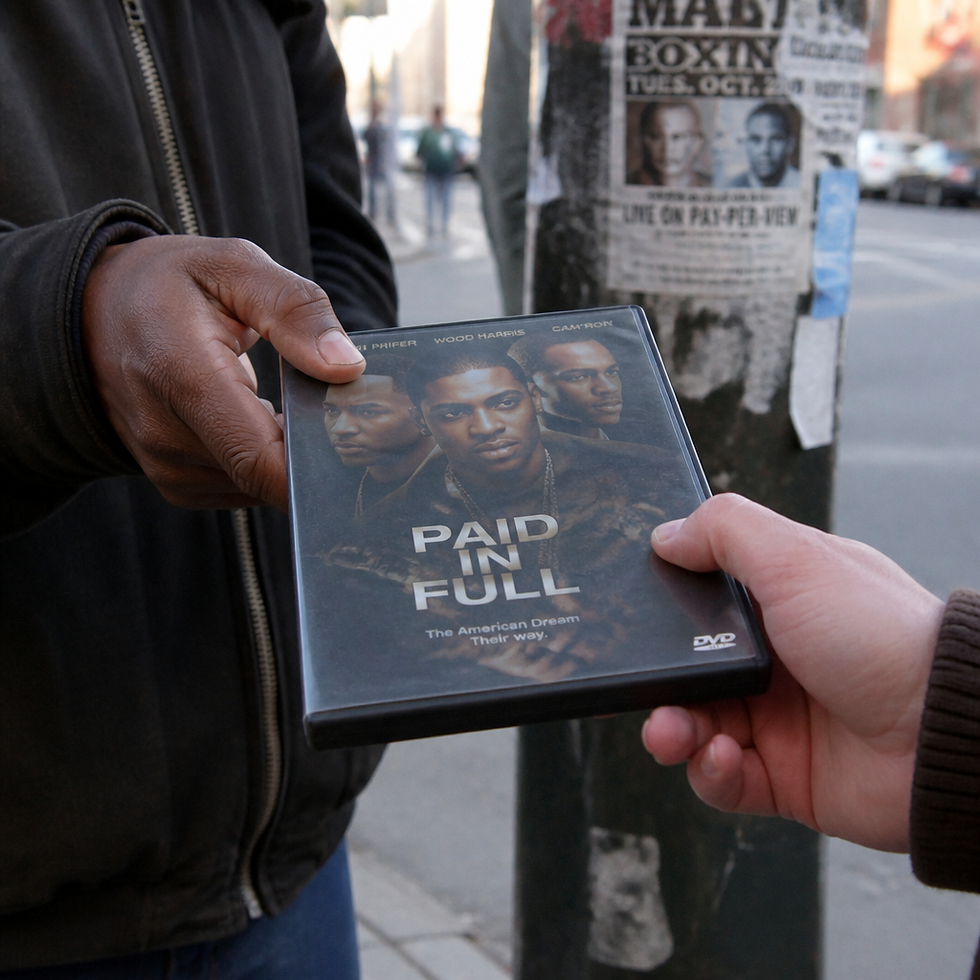
Barbershops were the anchor point. A barbershop is a place where people spend time, where conversation happens, where culture gets filtered and discussed. Putting a DVD in a barbershop was not just a sales tactic. It was placement inside the exact environment where hip hop consumed itself. Corner stores, independent retailers, street vendors, and direct trunk sales filled out the rest of the network. In the early 2000s, discs were being sold in barbershops and train stations around the country, passed person-to-person in a way that mapped almost perfectly onto community geography.
The Smack DVD distribution model grew sophisticated enough to support consignment arrangements with regional retailers. At its peak, the brand was collecting $10 per unit on consignment from stores selling at $20, running an entirely self-sustaining business that owed nothing to any major label or media conglomerate.
Pro tip: The geography of street DVD distribution tells you where hip hop's real audience lived in the 2000s. The cities and neighborhoods where these discs moved fastest were the same communities that would later become the source of the genre's most influential acts of the following decade.
What Mainstream Media Refused to Show
The editorial choices made on street DVDs were not accidents. They were direct responses to a specific, documented failure by mainstream media to cover hip hop culture on its own terms.
BET and MTV covered hip hop, but they covered a version of it that had been filtered for advertiser safety, formatted for general audiences, and stripped of anything that could generate controversy. Street DVDs operated with none of those constraints. They showed beef that was actually happening. They let rappers speak without a producer cutting them off. They documented regional scenes that national outlets would not acknowledge until those scenes produced a breakout artist.
The result was that street DVDs became the record of record for an enormous segment of hip hop history. Artists who appeared on these discs said things, freestyled, and performed in contexts they never replicated on television. Battles that were documented on Smack DVD established formats and competitive frameworks that eventually shaped an entire professional battle rap industry. The content that spread through this ecosystem was culturally significant in ways that only became fully clear in retrospect.
Films like the regional DVDs covering Oakland, Philadelphia, Atlanta, and New York captured street-level reality in ways that gave genuine insight into stories of street culture in America, material that the mainstream media apparatus was either unable or unwilling to produce.
Comparison: Street DVDs vs. Later Platforms
To understand why the street DVD era mattered, it helps to compare it directly with the platforms that came after it, measuring them against the same criteria: editorial independence, community rootedness, and the quality of cultural documentation.
Dimension
Street DVD Era (2000-2010)
Algorithm-Driven Platforms (Post-2010)
Editorial control
Fully independent. No network, label, or advertiser approval required. Creators controlled every frame.
Platform terms of service, content moderation, and advertiser guidelines shape what survives and what gets removed.
Distribution method
Physical, person-to-person. Barbershops, corner stores, trunk sales, consignment with independent retailers.
Digital, algorithm-mediated. Visibility depends on engagement signals, platform recommendation logic, and monetization eligibility.
Cultural authenticity
Shot inside the communities being documented, by people with direct relationships to the subjects. No outsider filter.
Variable. Authentic content competes with entertainment-optimized content on the same feeds, often losing visibility to the latter.
Preservation
At risk. Physical discs degrade, digital uploads get removed, original operators moved on. Most content has disappeared.
Also at risk. Platform shutdowns, takedowns, and link rot mean even recent content can vanish without archival intervention.
Who got covered
Regional artists, underground scenes, street figures that mainstream media ignored entirely.
Algorithm tends to amplify already-popular content. Discovery for truly underground artists remains difficult.
The comparison makes one thing clear. Street DVDs were not a primitive version of what came later. They were a structurally different approach to cultural documentation, one with specific advantages that later platforms could not replicate and have not replaced.
Why So Much of This Content Disappeared
By 2008, YouTube had exploded and online platforms started generating free content at scale. As one account of the era put it, everybody suddenly had access to recording and editing equipment, and the economics that had sustained the street DVD market collapsed almost overnight. Bootlegging had always been a problem for these independent operations, but it was the proliferation of free digital content that fundamentally changed the business model.
Brands that had built sustainable independent operations were forced to go quiet, pivot, or shut down entirely. The content they had produced did not transfer cleanly to the emerging digital landscape. Some of it was uploaded by fans acting as unofficial archivists, and much of that was later removed through copyright enforcement actions or platform policy decisions. The original operators had moved on. The labels and networks that might have had institutional interest in preservation had no claim on the material and no reason to act.
What remained was fragmented, scattered across dying file hosting services, corrupted hard drives, and physical discs in private collections. A complete record of one of the most important decades in hip hop documentation became one of the most endangered cultural archives in American music history.
In the wake of YouTube's founding, fans had begun ripping old DVDs and uploading content, acting as informal archivists of this critical movement in hip hop history. But informal archiving is not the same as preservation. Files get lost, links break, and without organizational structure, even recovered content becomes difficult to find and impossible to contextualize.
Preserving the Street DVD Era Today
Hood Box Office, operating in partnership with the Wendy Black Foundation, a 501(c)(3) non-profit organization, was built specifically to address this gap. The mission is straightforward: preserve the entire street DVD era, brand by brand, interview by interview, volume by volume, and present it as what it actually is, a digital museum of cultural history that mainstream platforms failed to protect.
The brands in the Hood Box Office archive include Smack DVD, Cocaine City, The Come Up, Jordan Tower Films, and Hip Hop Beef. These are not just titles in a catalog. They are primary source documents for a decade of hip hop history. An interview captured on a street DVD in 2004 cannot be recreated. A freestyle documented before an artist became famous exists nowhere else. A record of a beef, a neighborhood, or a moment in a city's hip hop scene has no substitute if the original footage disappears.
Cultural preservation of this kind requires the same institutional seriousness that a library or museum brings to physical artifacts. The Wendy Black Foundation's non-profit structure makes that seriousness possible, providing a framework for archiving this material in a way that treats it as the legitimate cultural history it represents, not as content to be monetized and discarded when engagement numbers drop.
The street DVD era produced the original viral content. Preserving it is not about the past. It is about making sure the record of where hip hop culture actually came from does not get permanently erased by platform decisions made without any consideration of historical value.
Pro tip: If you are a collector with original street DVDs still in your possession, those physical discs are primary source material. Connecting with preservation organizations is not just good for the culture. It is the only practical way to ensure that content survives in a form that can be properly archived and contextualized.
Frequently Asked Questions
What exactly was the street DVD era in hip hop?
The street DVD era refers to the period from approximately 2000 to 2010 when independent videographers produced physical disc magazines documenting hip hop culture, street life, and underground rap scenes. These discs circulated through barbershops, corner stores, and informal street networks, capturing content that mainstream media refused to cover. Brands like Smack DVD, The Come Up, Cocaine City, and Jordan Tower Films were among the most recognized productions of this era.
Why are street DVDs considered the original viral content platform?
Street DVDs functioned exactly like viral content, but through physical distribution instead of digital sharing. A disc would drop, word spread person-to-person, copies multiplied, and the content inside became community-wide reference points that people quoted and debated. The content that spread fastest, unfiltered artist interviews, battle rap footage, and documentation of real street beef, followed the same patterns that drive engagement on digital platforms today. The only difference was the transmission method.
Who created Smack DVD and how did it work as a business?
Smack DVD was founded by Troy "Smack" Mitchell, an entrepreneur and videographer from Queens Village, New York. Mitchell started with a consumer camera and basic editing software, producing uncensored content that BET and MTV would not air. The brand eventually moved 40,000 to 50,000 copies independently, using a consignment model with mom-and-pop retailers across the country. Regional stores sold discs for as much as $20, with Smack collecting $10 per unit through that arrangement.
What happened to street DVD content after YouTube emerged?
When YouTube and free online video platforms took off around 2008, the economic foundation of the street DVD business collapsed. Free digital content made physical disc sales unsustainable. Some fans uploaded DVD content as informal archivists, but much of that material was later removed through copyright enforcement or platform policy changes. Original operators moved on, and the content became fragmented across dying file services, private collections, and degrading physical media. Most of the era's documentation has effectively disappeared from public access.
What role did Cocaine City DVD play in the street DVD era?
Cocaine City DVD, launched in 2002, was one of the era's most influential productions. Drawing direct inspiration from Smack DVD, it was built as a grassroots media product for a pre-YouTube era when hip hop moved through barbershops, corner stores, and bootleg networks. French Montana served as host, cameraman, and marketer, using the platform to conduct interviews with street legends and established artists while simultaneously building his own profile. It became one of the defining underground documentary brands of the decade.
Why does preserving street DVD content matter today?
Street DVDs are primary source documents for a decade of hip hop history. They captured interviews, freestyles, battles, and street-level cultural moments that exist nowhere else. Once this footage is gone, it cannot be recreated. The artists captured before their breakthrough moments, the regional scenes documented before national recognition, and the unfiltered accounts of street culture that mainstream media refused to cover represent irreplaceable historical material. Preservation projects that treat this content as cultural heritage rather than disposable content are doing genuinely important archival work.
How is Hood Box Office different from other platforms that host hip hop content?
Hood Box Office is a dedicated cultural preservation project, not a general video hosting platform. Operating in partnership with the Wendy Black Foundation, a 501(c)(3) non-profit, it is specifically focused on archiving the street DVD era brands: Smack DVD, Cocaine City, The Come Up, Jordan Tower Films, and Hip Hop Beef. The non-profit structure means the mission is preservation and cultural access, not engagement optimization. General platforms make content removal decisions without any consideration of historical value. Hood Box Office treats street DVD content as what it actually is: a digital museum archive of documented hip hop history.
If you lived through the street DVD era, or if you are discovering it for the first time through this archive, share which brand or moment hits hardest for you, the culture deserves to be remembered by the people it was made for.


Comments