Cities That Defined the Street DVD Era: NY to ATL

Before YouTube algorithms decided what the culture would see, before streaming platforms curated rap history into digestible playlists, the street DVD era from 2000 to 2010 ran on geography. The city you were from determined which cameras showed up, which stories got told, and which artists broke out of the underground before any label rep ever noticed. New York built the template, Atlanta supplied the heat that redefined trap on film, Baltimore carved its own lane through raw documentation, and a handful of other cities added chapters that mainstream media simply refused to write. This is the map of that era, city by city, brand by brand.
Table of Contents
Quick Takeaways
Key Insight
Explanation
New York built the original blueprint
Smack DVD, founded by Troy "Smack" Mitchell out of Queens Village, established the format: uncensored interviews, live MC battles, and fly-on-the-wall access to artists mainstream outlets wouldn't touch.
Atlanta's street scene predated its mainstream explosion
Street DVDs documented Gucci Mane, T.I., and Young Jeezy in raw, unpolished settings before trap became a radio-ready genre. The footage showed the culture forming, not the finished product.
Baltimore had its own distinct documentary voice
Jordan Tower Films brought Baltimore's street culture and underground rap scene onto disc when no national outlet cared about covering it. That specificity is exactly what made it valuable.
The Come Up DVD bridged multiple cities
Born out of Brooklyn through Dirty Money Films, The Come Up sold from barbershops and corner stores from New York to Atlanta to Houston, making it one of the era's most geographically wide-reaching brands.
Most of this content has disappeared from the internet
WorldStar deleted it. YouTube took it down. The original operators moved on. Hood Box Office, in partnership with the Wendy Black Foundation, is the primary institutional effort preserving this archive.
Geography determined cultural visibility
Cities without a DVD crew documenting them simply did not exist in the street DVD conversation. The camera was a form of recognition that music alone could not provide.
Street DVDs were sold in physical spaces that defined communities
Barbershops, corner stores, and street vendors were the distribution network. This meant the audience was hyper-local first, national second, which gave the content its authenticity.
New York: Where the Street DVD Era Was Born
No honest account of the street DVD era starts anywhere other than New York. The format was invented here, refined here, and exported everywhere else from here. Smack DVD, produced by Troy "Smack" Mitchell from Queens Village, New York, was the foundational text. S.M.A.C.K. stood for Streets, Music, Arts, Culture and Knowledge, and the series delivered exactly that: uncensored interviews with popular and up-and-coming hip-hop artists, giving viewers an exclusive, fly-on-the-wall look inside lives that major publications had no interest in covering.
What Mitchell built was not just a product. It was a journalistic infrastructure for a culture that had no other infrastructure. In the early 2000s, working what he described as the "regular hustle and bustle," he created a DVD-magazine format that became required viewing across every borough, every barbershop, every block that took hip-hop seriously. The content was raw because the culture was raw. The access was real because no label publicist was screening the talent beforehand.
New York also produced The Come Up DVD, which emerged out of Brooklyn through Dirty Money Films in the mid-2000s. Where Smack DVD built its reputation on battles and interviews rooted in the New York scene, The Come Up operated as the underground bible of independent hip-hop, featuring raw freestyles and behind-the-scenes footage of artists who would go on to define the next decade of rap. Lil Wayne before Tha Carter III. Kendrick Lamar before he was a household name. The Come Up caught them in formation.
Pro tip: If you are trying to understand the timeline of any New York rapper's early career between 2000 and 2008, the Smack DVD and Come Up archives are more reliable primary sources than any music press retrospective written after the fact. The cameras were there in real time.

Queens, Harlem, and the Bronx: All on Disc
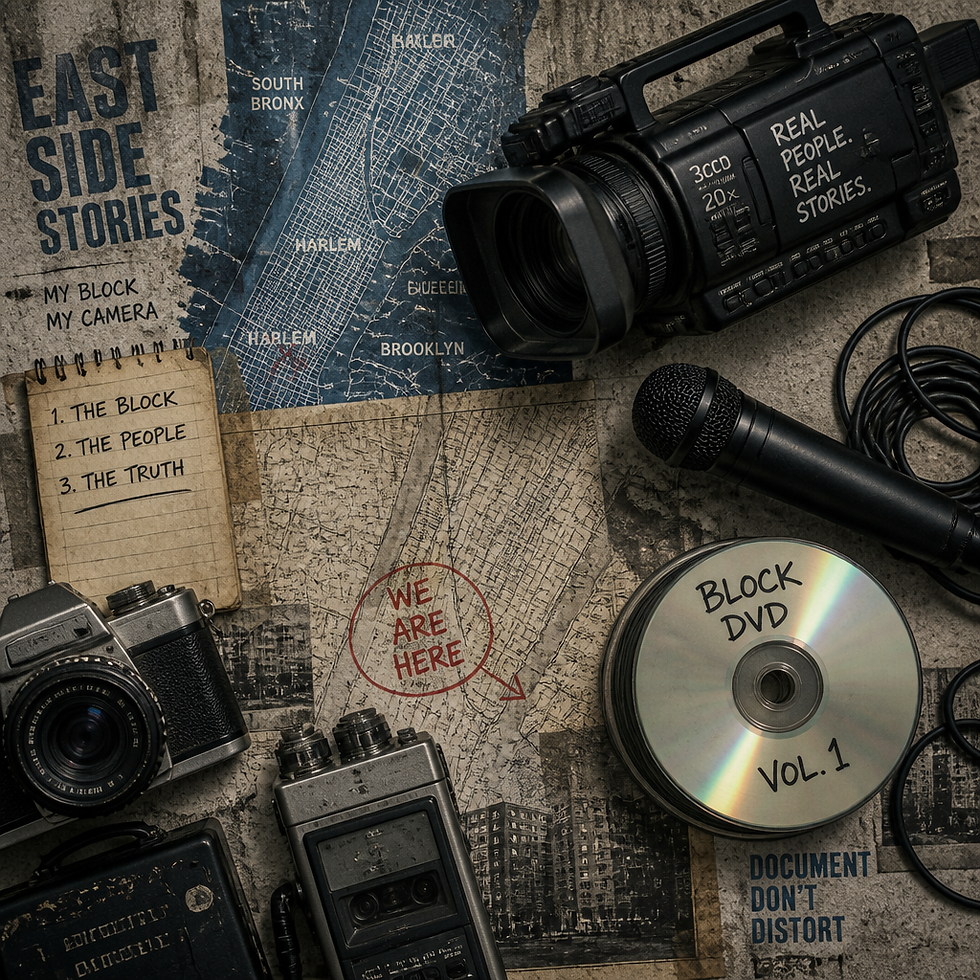
New York's five boroughs were not treated equally by mainstream media, but the street DVD format had no such bias. Queens gave the format its founder. The Bronx, as hip-hop's birthplace, had a gravitational pull that kept it represented across multiple DVD brands. Harlem artists found the DVD circuit a critical platform during years when the borough's commercial output was uneven but its street credibility was untouchable.
The borough-by-borough specificity of the New York footage is one of the reasons this archive matters. A Smack DVD interview filmed in Queensbridge communicates something about that housing project, that neighborhood, and that moment in time that no studio album liner note ever could. That is the kind of documentation Hood Box Office exists to preserve.
Atlanta: Trap Documentation Before Trap Had a Name
By the early 2000s, Atlanta's street rap was sharpening into what the world would later know as trap. T.I. helped push the word into the mainstream with his 2003 album Trap Muzik, while Gucci Mane and Young Jeezy gave the sound different but equally important identities. What the street DVDs captured was the moment before any of that reached scale.
One of the most documented early Atlanta moments in the Smack DVD archive is the Gucci Mane segment, filmed in Gucci's own backyard and driveway when he was still an underground artist operating as the underdog. The access was direct: no publicist, no stylist, no label rep managing the narrative. Mitchell described the level of access as extraordinary, and that access is what made the footage culturally significant rather than commercially packaged. Street DVDs showed Atlanta in the tension between survival, ambition, and consequence, which is the exact texture that defined the city's sound.
Cocaine City DVD, archived through Hood Box Office, served Atlanta's underground and its surrounding regional scene in ways that captured the city's street culture with the same commitment to unfiltered documentation that Smack DVD brought to New York. Atlanta was not a footnote in the street DVD world. It was a parallel headquarters.
Why Atlanta on DVD Hit Different Than Atlanta on Radio
Radio Atlanta was polished. DVD Atlanta was the city before the polish. The artists on those discs were speaking directly to audiences who lived the same realities they were rapping about, without the mediation of a major label's marketing department deciding what angle to present. That is why the footage remains historically significant even as the artists themselves became global brands. The DVD record shows the formation, not the finished product.
The camera was there before the contract. The street DVD era documented artists at the exact moment their identity was being formed, not after it had been managed into something sellable.
Baltimore and the Mid-Atlantic Voice
Baltimore occupies a specific and underappreciated place in the street DVD era. The city had a thriving rap underground and a street culture that was entirely its own, and it had Jordan Tower Films as the outfit willing to put it on disc. Jordan Tower brought Baltimore's world onto the format at a time when no national outlet was paying serious attention to what was happening in the city's rap scene.
This is the core argument for why geography mattered during the street DVD era: cities that had their own DVD brand had their culture preserved. Cities that did not largely disappeared from the documented record of that decade. Baltimore had Jordan Tower Films, which means Baltimore has a record. That record is now housed within the Hood Box Office archive, accessible through a platform built explicitly to keep it alive.
The Mid-Atlantic region more broadly produced street culture and rap talent that existed in the margins between New York's dominance and the South's commercial surge. DVD documentation was the only mechanism that consistently captured it. Without preservation, that entire layer of underground rap history simply does not exist in any recoverable form.
Pro tip: When researching mid-2000s rap scenes outside of New York and Atlanta, Jordan Tower Films footage is one of the few remaining primary sources for Baltimore's underground culture during this period. Academic and journalistic sources from that era focused almost exclusively on the coasts, leaving city-specific DVD documentation as the only remaining record.

The Cities the DVDs Covered That Mainstream Media Ignored
New York, Atlanta, and Baltimore represent the most clearly institutionalized nodes of the street DVD era, but the format was always more geographically ambitious than that. Hood 2 Hood: The Blockumentary, a widely circulated underground documentary from the era, specifically showcased overlooked inner-city Black communities across the United States, presenting regional cultures that mainstream hip-hop coverage simply refused to treat as worthy of documentation.
The Come Up DVD extended this logic by operating as a genuinely national distribution network. Its volumes were sold out of barbershops, corner stores, and street vendors from New York to Atlanta to Houston, which meant its geographic reach was built into its distribution model from the start. Houston's scene, with its own distinct sound and visual identity, appeared in the Come Up's pages alongside New York and Atlanta artists at a time when Southern rap outside of Atlanta was still being treated as regional novelty by the mainstream press.
The KQED cultural writer Pendarvis Harshaw documented how, in the early 2000s, the underground DVD business was "a major conduit of culture," with discs being sold in barbershops and train stations around the country. The format was national infrastructure built entirely outside of institutional media, which is exactly why most of its output has since disappeared from major platforms. It was never designed to live inside those platforms. It lived in the physical spaces of communities.
Houston, the Bay Area, and the Cities That Built Regional Identity on Disc
Houston's chopped-and-screwed culture had its own visual documentation ecosystem during this era, and the Bay Area's hyphy movement was captured on underground DVDs before and after it was sanitized for MTV consumption. The street DVD era was not monolithic. It was a distributed network of regional voices, each with its own aesthetic and its own concerns, occasionally intersecting when a major artist traveled or when a national brand like The Come Up swept through a city on distribution.
What unites all of these cities is not geography but the shared decision to document what mainstream media dismissed. The street DVD era was, at its core, a refusal to let those stories go untold.
How the Street DVD Brands Compared City by City
Each major street DVD brand operated with a distinct editorial identity, a primary geographic base, and a specific approach to what it documented. Understanding the differences between them is essential to understanding how the era worked as a whole.
DVD Brand
Primary City / Region
Editorial Approach and Cultural Focus
Smack DVD
Queens, New York
Founded by Troy "Smack" Mitchell; focused on MC battles, uncensored artist interviews, and direct street-level access. Set the standard for the DVD-magazine format that all others followed.
The Come Up DVD
Brooklyn, New York (national distribution)
Dirty Money Films production with national reach. Known for raw freestyles and early footage of artists before mainstream recognition. Sold from New York to Atlanta to Houston.
Cocaine City DVD
Atlanta and Southern regional
Deep roots in Atlanta's underground street culture. Documented the trap era's formation from the ground level, capturing artists and environments that polished mainstream media would not touch.
Jordan Tower Films
Baltimore and Mid-Atlantic
Primary documentary voice for Baltimore's street culture and rap underground. One of the few brands that consistently covered the Mid-Atlantic region during an era dominated by New York and Southern narratives.
Hip Hop Beef
Multi-city
Focused specifically on the conflicts, rivalries, and interpersonal dynamics within hip-hop communities. Covered beefs that labels and publicists actively tried to suppress from mainstream coverage.
Why This Geography Matters for Cultural Preservation
The street DVD era produced a geographic record of hip-hop and street culture that no other medium came close to replicating. Major label press releases covered artists in controlled settings. Music journalism covered markets. The DVDs covered people, blocks, and cities, on their own terms, in their own spaces.
The problem is that this record is nearly gone. As the Hood Box Office network documents directly: WorldStar deleted it. YouTube took it down. The original operators moved on. The archive that once circulated through barbershops and corner stores across the country now exists only in fragments, most of which are not publicly accessible. This is the precise preservation problem that Hood Box Office and the Wendy Black Foundation exist to address.
Understanding which cities appeared in this footage, and which brands covered them, is not a trivia question for hip-hop enthusiasts. It is a prerequisite for understanding which parts of the culture's history are at risk of being permanently lost. A city that was documented has a recoverable record. A city that was not documented does not. The geography of the street DVD era is the geography of what we can still save.
Why Archive.org and WorldStar Are Not the Answer
Archive.org is a general-purpose digital archive with no editorial framework for understanding what street DVD footage means, who created it, or why it matters in the context of hip-hop cultural history. WorldStar built its reputation on a completely different editorial logic, one that prioritized virality over preservation. Neither platform approaches this content as a curated cultural museum.
Hood Box Office's advantage over both competitors is specificity: the platform is built around the actual brands of the street DVD era, maintaining curatorial context that raw file dumps on archive.org cannot provide. Knowing that a clip came from Smack DVD volume 4, documented in Queens in 2003, is not the same as knowing that a video file exists on a server somewhere. Context is what makes documentation into history.
Pro tip: If you are a researcher, journalist, or documentary filmmaker working on hip-hop cultural history from 2000 to 2010, the Hood Box Office archive is the only platform currently maintaining curatorial access to the core street DVD brands alongside institutional preservation infrastructure through the Wendy Black Foundation's 501(c)(3) status. That institutional structure means the archive has accountability and continuity that a fan-run upload channel cannot provide.
Frequently Asked Questions
What cities were most represented in the street DVD era?
New York dominated the early street DVD era, with Queens and Brooklyn producing Smack DVD and The Come Up DVD respectively. Atlanta became equally central as trap culture emerged, with Cocaine City DVD covering that scene extensively. Baltimore had Jordan Tower Films as its primary documentary outlet. Houston and the Bay Area appeared in multi-city projects like The Come Up DVD and Hood 2 Hood: The Blockumentary. The coverage was uneven, and cities without a dedicated DVD crew were largely undocumented.
What made the street DVD era different from mainstream hip-hop journalism of the same period?
Mainstream hip-hop journalism in the 2000s was filtered through label relationships, publicist access, and editorial decisions made in offices removed from street culture. Street DVDs operated with no such filter. Cameras went directly into artists' homes, backyards, and neighborhoods. Interviews were uncensored. Artists spoke without a PR layer between them and the audience. The result was documentation that was rougher but far more honest about who these artists were and where they came from.
Why has so much street DVD content disappeared from the internet?
The street DVD era predated the content moderation frameworks of major platforms, and when those frameworks arrived, they applied retroactively. Content was flagged for profanity, violence, and copyright issues and removed in bulk. WorldStar, which had hosted significant amounts of this content, eventually deleted much of it as the platform shifted its editorial focus. The original DVD producers had largely moved on by the time preservation became a concern, leaving no institutional party managing the content's survival.
How does Hood Box Office differ from just watching old clips on archive.org?
Hood Box Office is a curated digital museum built around specific brands, specifically Smack DVD, Cocaine City, The Come Up, Jordan Tower Films, and Hip Hop Beef. Archive.org is a file repository with no editorial framework for street DVD content. Hood Box Office maintains context: which brand produced a piece of content, what era it came from, and why it matters to hip-hop cultural history. That curatorial structure, backed by the Wendy Black Foundation as an institutional 501(c)(3) partner, is what separates preservation from mere storage.
Were any cities completely left out of the street DVD era's documentation?
Yes, and this is one of the most significant gaps in the cultural record. Cities without a dedicated DVD crew documenting them were largely invisible in the street DVD ecosystem. Smaller markets and cities that lacked the infrastructure to produce and distribute discs at scale were left out almost entirely. The street DVD era was geographically ambitious but ultimately constrained by who had cameras, distribution networks, and the hustle to make it work locally. That unevenness is part of what makes the existing archive so worth preserving.
What is the Wendy Black Foundation's role in street DVD preservation?
The Wendy Black Foundation is a 501(c)(3) non-profit that partners with Hood Box Office to provide the institutional infrastructure for cultural preservation. Its non-profit status gives the preservation effort legal and organizational accountability that a commercial platform alone could not provide. This matters for long-term archiving because it means the mission is not tied to commercial viability. Cultural artifacts that have no market value still deserve preservation, and the foundation structure supports exactly that kind of work.
Which city's street DVD footage do you think is most at risk of being permanently lost, and why? Drop your take in the comments or share this with someone who lived through the era.


Comments